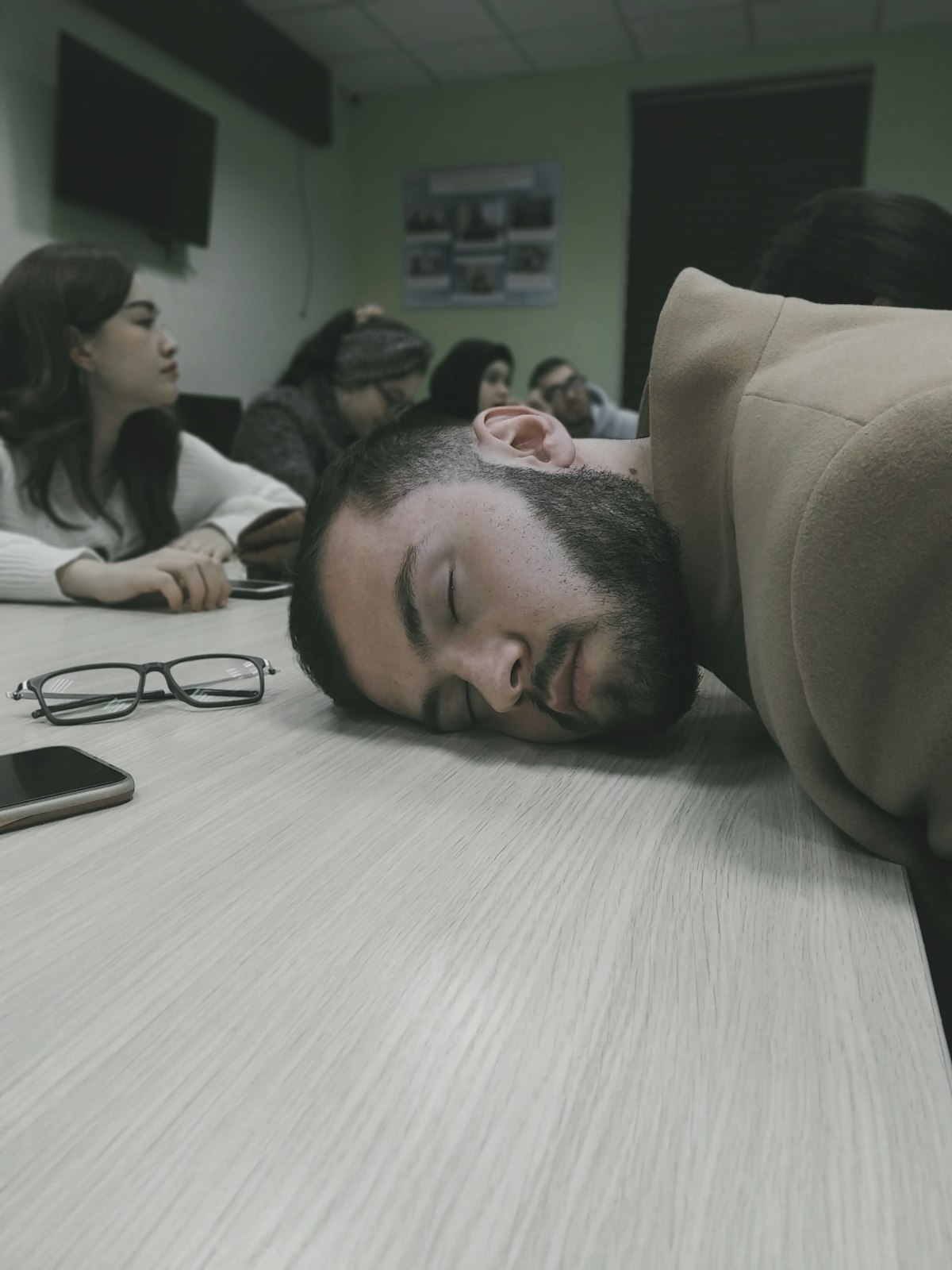
It's 2am in exam week. You're exhausted, you've finally closed the textbook, you lie down — and your brain chooses this exact moment to replay every formula, every untouched topic, and one embarrassing thing you said in 2019. Sound familiar?
You're not broken. You're experiencing completely predictable biology. Here's what's happening, and the four habits that actually fix it.
The science, briefly
Exam stress triggers your body's threat-response system. Cortisol — the alertness hormone that should be lowest at night — stays elevated, because your brain has classified Thursday's paper as a predator. Elevated cortisol does exactly what it evolved to do: it keeps you vigilant. Vigilance and sleep are opposites.
Worse, the relationship runs both ways. Poor sleep raises next-day cortisol and impairs the prefrontal cortex — the exact brain region you need for recall and reasoning in the exam hall. Meanwhile, the deep-sleep stages you're sacrificing are when the brain consolidates what you studied into long-term memory. Reading till 4am and sleeping three hours is, neurologically, studying with a hole in the bucket.
So the goal isn't sleeping instead of studying. It's recognising that sleep is studying — the filing stage.
Habit 1: Set a "last input" time
Stop taking in new material 60–90 minutes before bed. Your brain needs runway between intake and shutdown. Use that final window for low-effort review — skimming your own summary notes, not opening a new chapter. New material at 1am mostly generates anxiety, not knowledge.
Habit 2: Dump the loop onto paper
That 2am mental replay is your brain trying not to forget open tasks. Beat it at its own game: before bed, write tomorrow's plan on paper. Which topics, what order, what time. Studies on "constructive worry" show this simple act measurably shortens the time it takes to fall asleep — once it's written down, the brain stops rehearsing it.
Habit 3: Protect the darkness
Light — especially phone light, held 20cm from your face — suppresses melatonin, the hormone that opens the gate to sleep. The doom-scroll after closing your books is actively sabotaging the next six hours. Phone face-down, away from the pillow. If your hostel has light and noise you can't control, a cheap eye mask and earplugs are the highest-return ₦2,000 you'll spend this semester.
Habit 4: Keep the wake time fixed
Counterintuitive but powerful: a consistent wake-up time stabilises your body clock faster than a consistent bedtime. Even after a bad night, get up at your set time. Yes, it hurts that day. But it builds sleep pressure that makes the next night deep and automatic — instead of beginning the cycle of 4am sleep and 11am waking that wrecks the whole week.
The exam-week bottom line
Six to seven hours of real sleep will add more marks than two extra hours of foggy 3am reading. That's not motivational talk — it's how memory consolidation works.
Read hard. Then sleep like it's part of the syllabus. Because biologically, it is.
This is general wellness information, not medical advice — if sleep problems persist beyond exam season, please talk to a professional. And if exam pressure ever feels like more than stress, the counselling unit is there for exactly that.